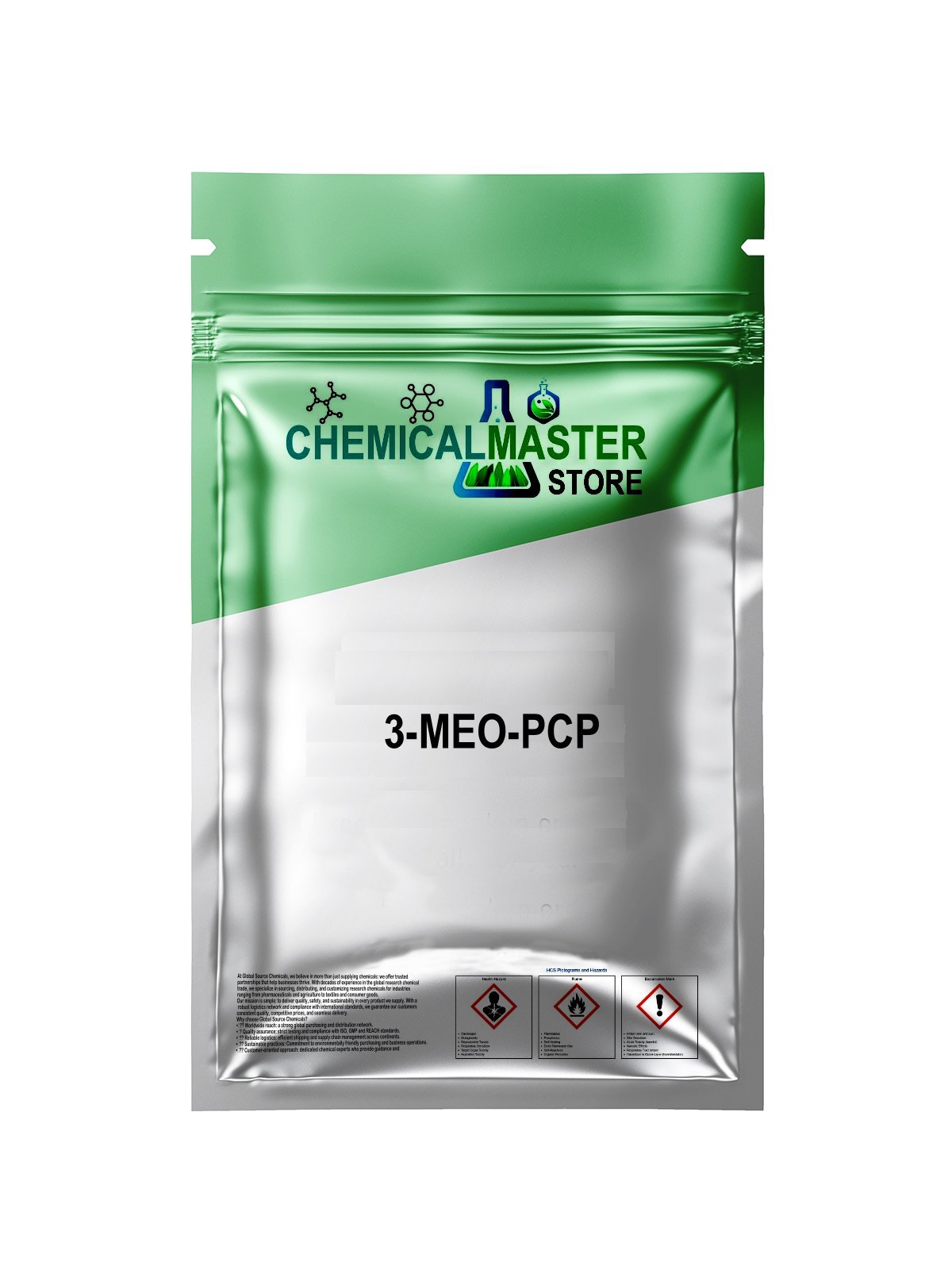
3-MEO-PCP
3-MeO-PCP eigenschappen
Synoniem: 1-[1-(3-methoxyfenyl)cyclohexyl]-piperidine, monohydrochloride
CAS Nummer: 91164-58-8
Formule: C18H27NO • HCL
Molmassa: 309,9 g/mol
Zuiverheid: ≥98%
$111.15
* The information on this page is a summary and is not intended to cover all available information about this medication. It does not cover all possible uses, directions, precautions, drug interactions or adverse effects and is not a substitute for the expertise and judgement of your healthcare professional.
3-MeO-PCP (3-Methoxyphencyclidine) – Dissociatieve Onderzoeksstof van de Arylcyclohexylamine-Klasse
Wat is 3-MeO-PCP?
3-MeO-PCP (3-Methoxyphencyclidine) is een synthetische dissociatieve verbinding, verwant aan PCP en ketamine. De stof behoort tot de arylcyclohexylamine-klasse en wordt uitsluitend gebruikt voor wetenschappelijk onderzoek naar NMDA-receptorinteractie en dissociatieve farmacologie.1cP-LSD 150 MCG Art Blotters
Belangrijkste Kenmerken
- Zuiverheid ≥98% (bevestigd via GC-MS, HPLC en NMR)
- Wit kristallijn poeder, uniform van consistentie
- Geavanceerd verpakt met zuurstof- en vochtabsorberende materialen
- Volledige batchspecifieke documentatie en referentiespectra.O-DSMT 50mg Pellets
Farmacologisch Profiel
- NMDA-receptor antagonisme: krachtige blokkering van glutamaatactiviteit
- Secundaire effecten op monoamines: dopamine- en serotoninemodulatie
- Kinetiek (preklinisch):
- Opkomst: 30–60 minuten
- Werkingsduur: 4–6 uur
- Halfwaardetijd: 7–9 uur
Onderzoeksdoeleinden
- Neurochemisch onderzoek
- NMDA-receptor mechanistiek
- Anesthesie- en neuroprotectiemodellen
- SAR-studies
- Methoxy-substitutie versus andere PCP-afgeleiden
- Structurele effecten op receptoraffiniteit
- Gedragsmodellen
- Dissociatieve en sensorische effecten
- Pijnverwerking en perceptie
- Cognitieve disfunctie in diermodellen
Technische Specificaties
- Molecuulformule: C17H25NO
- Molecuulgewicht: 259,39 g/mol
- Smeltpunt: 235–238°C
- Oplosbaarheid: >50 mg/ml in ethanol
Analytische Data
- HPLC retentietijd: 9.2 ± 0.3 min (C18-kolom)
- Massaspectrometrie: m/z 260 [M+H]+
- ¹H NMR (CDCl₃): δ 7.3–7.5 (m, 4H), 3.8 (s, 3H), 2.4 (m, 2H)
Doseringsinformatie (alleen ter referentie)
- In vitro: 0.1–10 µM
- Preklinisch: 0.1–1.0 mg/kg lichaamsgewicht
- Chemisch onderzoek: 5–15 mg per test
Veiligheid en Opslag
- Houdbaarheid: 36 maanden bij -20°C
- Opslag: luchtdichte verpakking onder inert gas
- Compatibel met standaard buffers en oplosmiddelen
- Altijd verwerken onder zuurkast en labomilieu
Onderzoeksdocumentatie
Elke bestelling bevat:
- Certificaat van Analyse (COA)
- Veiligheidsinformatieblad (SDS)
- Technisch datasheet
- Volledige spectrale set: ¹H NMR, ¹³C NMR, FTIR, MS
Alleen bestemd voor wetenschappelijk gebruik. Niet geschikt voor menselijke consumptie of diagnostische toepassingen.1V-LSD 150 MCG Blotters
Frequently asked questions
A seemingly elegant design can quickly begin to bloat with unexpected content or break under the weight of actual activity. Fake data can ensure a nice looking layout but it doesn’t reflect what a living, breathing application must endure. Real data does.
Websites in professional use templating systems. Commercial publishing platforms and content management systems ensure that you can show different text, different data using the same template. When it’s about controlling hundreds of articles, product pages for web shops.
A seemingly elegant design can quickly begin to bloat with unexpected content or break under the weight of actual activity. Fake data can ensure a nice looking layout but it doesn’t reflect what a living, breathing application must endure. Real data does.
Websites in professional use templating systems. Commercial publishing platforms and content management systems ensure that you can show different text, different data using the same template. When it’s about controlling hundreds of articles, product pages for web shops.